----------------------------------------------------------------------------------------------------------
Welcome to the Skull Reef Survival Course, based on the real threats, terrain, weather, and dangers encountered by Sam & Mark during their 17-day ordeal on the island.
This course gives you the exact knowledge, skills, techniques, and decision-making processes that allowed them to survive:
Tropical storms
Scarcity of fresh water
Dangerous wildlife
Hostile islanders
Food shortages
Heat exposure
Navigational confusion
Emotional stress and isolation
By the end of this course, you will know how to survive anywhere — not just Skull Reef.

[INSERT IMAGE MODULE 1 HERE]
Skull Reef is shaped like a broken crescent with:
Rocky cliffs on the east
Dense jungle in the center
Lagoons and coves on the west side
A freshwater stream only active after rainfall
Razor-sharp volcanic stones around parts of the shore
Understanding terrain = understanding danger.
The biggest threats:
Dehydration
Heatstroke
Night predators
Storm surges
Mosquito-borne diseases
Hostile groups
Your survival plan must address all six.
[INSERT IMAGE MODULE 2 HERE]
Sam & Mark used:
Rain catchers (leaves + vines)
Coconut water (sparingly)
Damp soil collection pits
Bamboo drip funnels
Condensation traps
Never drink untreated water. Methods:
Hot-stone boiling
Solar disinfection (SODIS)
Sand-charcoal filters
Bark funnels
Coconut-fiber filters
Dizziness
Irritability
Dark urine
Rapid pulse
Confusion
[INSERT IMAGE MODULE 3 HERE]
Best zones:
20–30 m inland
Elevated ground
Natural wind blocks
Away from animal trails
Never in a dry riverbed
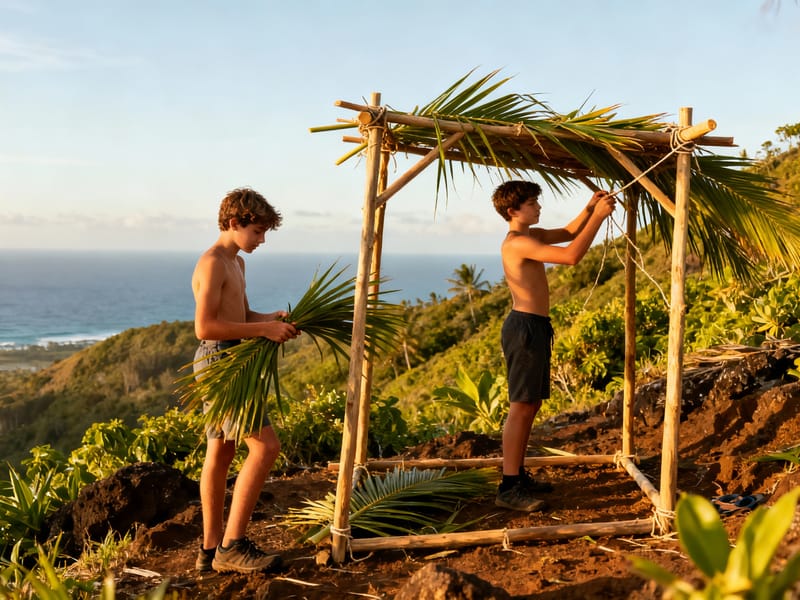
A-frame with Y-shaped branches
Palm leaf waterproofing
Insulated floor
Driftwood wind wall
Safe fire pit placement
Cross-braced roof
Double leaf layering
Rock anchors
Fire reflector wall
[INSERT IMAGE MODULE 4 HERE]
Bow-drill
Bamboo saw
Flint + volcanic rock
Ember preservation
Rain covers
Ember beds
Smoking racks
Wind tunnels
Purify water
Cook food
Repel insects
Make tools
Deter predators
[INSERT IMAGE MODULE 5 HERE]
Coconuts
Breadfruit
Crabs
Sea snails
Limpets
Palm hearts
Certain beetles
Bright berries
Cone snails
Pufferfish
Blue-ringed octopus
Box-shaped sea creatures
Hand-line
Spear fishing
Tidepool traps
Rock-pool corrals
Bone/shell hooks
Snare
Deadfall
Cage trap
Boar pit trap
[INSERT IMAGE MODULE 6 HERE]
Sun shadow method
Stars for navigation
Shoreline tracking
Jungle techniques
Avoid walking in circles
Smoke timing
Ground S.O.S. markers
Reflective signaling
Night fire positioning
[INSERT IMAGE MODULE 7 HERE]
Patrol routes
Patterns
Warning signs
Blind spots
Silent movement
Trail wiping
Scent masking
Night low-profile camping
Decoy trails
Avoid, escape, hide — not fight.
[INSERT IMAGE MODULE 8 HERE]
Learn to make:
Stone knife
Coconut-fiber rope
Fishing spear
Bamboo water container
Leaf cooking tray
Emergency sandals
Signal mirror
Torches
Bang sticks
[INSERT IMAGE MODULE 9 HERE]
Breath grounding
Prioritization
Panic interruption
Daily routine
Micro-goals
Safety rituals
Accept reality
Control the controllable
Celebrate small progress
[INSERT IMAGE MODULE 10 HERE]
The plan Sam & Mark used:
Mapping patrol windows
Tide timing
Using storms as cover
Night shoreline navigation
Building a raft
Orienting by sunrise
Includes:
Raft blueprint
Paddling technique
Distance estimation
How to spot rescue vessels
[INSERT IMAGE MODULE 11 HERE]
Covers:
Jungle wound cleaning
Improvised bandages
Sprain immobilization
Coconut-oil antiseptic
Treating insect bites
Preventing infection
[INSERT IMAGE MODULE 12 HERE]
Learn:
Identifying storm signs
Securing shelter
Anchoring tools
Protecting fire in wind
Riding out lightning storms
[INSERT IMAGE MODULE 13 HERE]
Includes:
Safe pathfinding
Avoiding thorn plants
Spotting animal signs
Using vines for rope
Creating jungle markers
[INSERT IMAGE MODULE 14 HERE]
Techniques:
Reading tides
Avoiding rip currents
Safe shellfish harvesting
Seaweed identification
Using tidal pools for food
[INSERT IMAGE MODULE 15 HERE]
Covers:
Low-visibility movement
Hidden fire setup
Safe sleep positions
Night predator awareness
Maintaining warmth
[INSERT IMAGE MODULE 16 HERE]
Learn to identify:
Animal tracks
Human footprints
Broken vegetation
Fresh vs old trails
Danger indicators
[INSERT IMAGE MODULE 17 HERE]
Make:
Multi-prong fish spear
Stone hatchet
Digging tool
Cooking tripod
Bamboo pressure boiler
[INSERT IMAGE MODULE 18 HERE]
Learn:
Energy budgeting
Effort-saving techniques
Rest cycles
Low-calorie survival strategy
Avoiding exhaustion
[INSERT IMAGE MODULE 19 HERE]
Includes:
Daily maintenance checklist
Long-term food rotation
Tool upkeep
Fire maintenance
Seasonal adaptation
[INSERT IMAGE MODULE 20 HERE]
You will learn:
Positioning for visibility
Signal fire timing
Open-area marking
Preparing for extraction
Improving chances of being spotted
If you learn and practice the skills in this course, you will never be helpless in the wild — whether stranded on Skull Reef or anywhere else.